◉
Stainless steel
The material we choose when something must last “for years ahead”. It resists moisture, chemicals and harsh conditions without changing its look. It is the right choice when you do not make compromises with quality.
Short and clear information about metals, thicknesses and finishes, so you can calmly choose the best option for your project.
Every part we cut with a laser starts with choosing the right material. The metal decides not only how the final product will look, but also how strong it will be, how heavy it is and how it behaves in real conditions.
If you are making a sign for outdoors, a decorative element for interior or precise parts for equipment – the material and thickness are key. In the next lines we will help you understand the options and choose what works best for your idea.
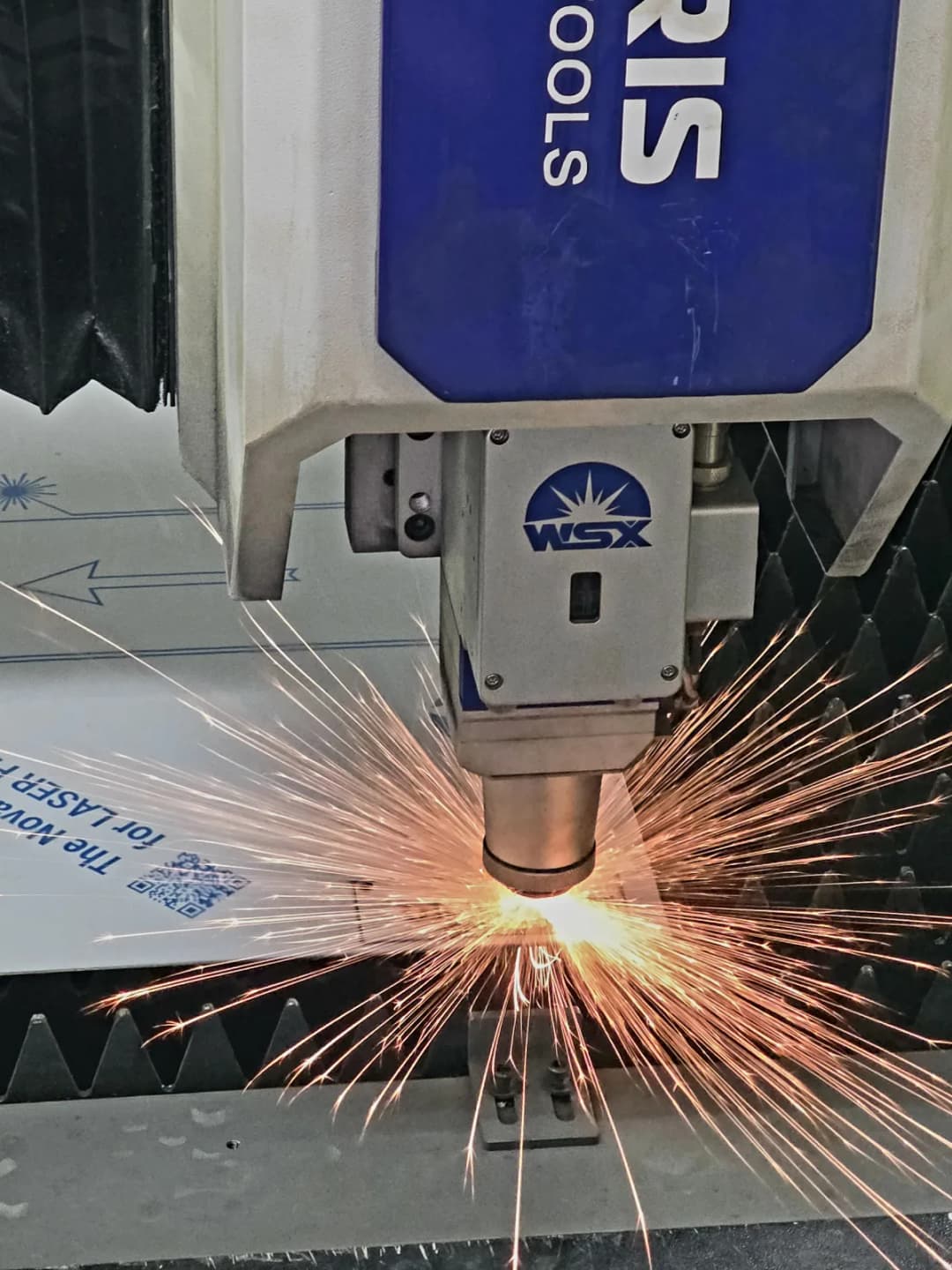
We selected materials that we cut every day and know very well – how they behave during cutting, coating quality and long-term durability.
The material we choose when something must last “for years ahead”. It resists moisture, chemicals and harsh conditions without changing its look. It is the right choice when you do not make compromises with quality.
High-quality stainless steel with a smooth, polished surface. It offers an elegant look with a soft shine and is easy to maintain.
Stainless steel with a high-gloss mirror finish. It delivers a strong visual impact and a premium, luxury appearance.
Light, strong and very practical. Aluminium does not rust and has a clean, silver look. It is suitable for both indoor and outdoor use when you do not want a very “heavy” feel.
A warm, golden metal that gives a very “alive” and luxurious look. Over time it can darken and develop patina – a look many people like because it feels noble and classic.
Steel with a zinc coating that protects it from rust. It has a typical “speckled” structure and gives an industrial style. Strong, practical and budget-friendly.
Hot-rolled steel with a natural dark oxide layer. It gives a very strong, industrial look. Often used when we want a “raw” and characterful visual effect.
Thickness affects strength, weight, detail and price. Here is how to quickly see what is best for your project.
Thin materials allow very fine ornaments and small holes. Good when detail is more important than strength.
The most common category. Gives enough strength but does not sacrifice precision. Suitable for most standard projects.
We use thicker materials when the part must feel heavy, solid and handle mechanical load.
Here we talk about maximum strength. These thicknesses are for parts that carry heavy loads or work in tough conditions.
For signs on facades, indoor signs or wayfinding, it is important that the material looks good and can handle daily use. This way your brand stays visible and well-kept for a long time.
For machine parts, equipment panels and functional pieces, stability and reliability are key. Here galvanized and black steel are very practical choices.
Wall decorations, ornamental screens and art installations need a material that works well with light and gives character to the space.
Brackets, housings and precise details need predictable material properties and accurate dimensions so they fit other components.
If you are not sure which material or thickness is best, contact us. Every day we help clients make this decision and we will be happy to discuss your idea.